


The Auckland/Tāmaki Makaurau Seahorse Survey
Did you know
Aotearoa has its own native seahorse?
Image: Revive our Gulf


Seahorses in Aotearoa
The seahorse, or manaia (Hippocampus abdominalis), is Aotearoa's only native seahorse, and the largest seahorse species in the world. It also occurs in southern Australia. Manaia can grow up to 30 cm long!
image: Benthics.com
Image: Benthics.com
Ecology
Pot-bellied seahorses live in seaweed forests and structured habitats such as wharves and jetties. Like other syngnathids (seahorses, pipefish, and seadragons), it is the male that gives birth to the young. Seahorses feed on small mobile prey such as amphipods, shrimp, and zooplankton.

A taonga embedded in mythology

Image: Sarang, Public domain, via Wikimedia Commons
The seahorse, or manaia/kiore moana, is an important taonga (treasure) species to tangata whenua (indigenous Māori). Traditionally, manaia are a mythological creature depicted with the body of a human and the head of a bird, which represent a connection between the physical and spiritual realms. Manaia are thus special kaitiaki (guardians), believed to protect the wearer from harm when carved into jewellery.
In 2021, a kaumatua of Ngātiwai (who have descended from the tribe of Ngāti Manaia) named a new pygmy pipehorse species that was found in their rohe (territory). Hori Parata and a team of kaumatua collaborated with scientists from Auckland Museum and the California Academy of Sciences to name the new species Cylix tupareomanaia, which translates to ‘the garland of the manaia’. This is the first time an indigenous group has been listed as the naming authority on a new species of animal.
The importance of manaia as symbols to tangata whenua, as well as the naming of a new syngnathid by Ngātiwai, highlight their cultural significance in mātauranga Māori and represent an important step towards collaboration between mana whenua and Western scientists.
A species in decline?
Anecdotal evidence from communities around Tāmaki Makaurau suggest that manaia may be in decline, but there are no formal studies to support this. The Kelly Tarlton's Marine Wildlife Trust has therefore established the Tāmaki Makaurau Auckland Seahorse Survey, and we need your help to gather data!


The Tāmaki Makaurau Auckland Seahorse Survey
The Kelly Tarlton's Marine Wildlife Trust is beginning a new project looking at density and distribution of pot-bellied seahorses (Hippocampus abdominalis) in Tāmaki Makaurau Auckland. We are also interested in other syngnathids in the area (pipefish and pipehorses).
These data will help us to better understand and implement conservation outcomes for our manaia.
The project has three parts:
1. Scientific dive surveys
2. Deploying artificial structures ('seahorse hotels') to test whether we can supplement existing seahorse habitat
3. A regionwide call for seahorse, pipefish, and pipehorse sightings
Scientific Dive Surveys
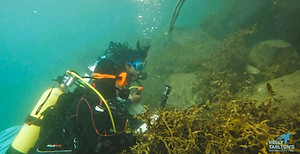
A team of scientific divers will be repeating surveys carried out 25 years ago at key sites in Tāmaki Makaurau Auckland to test whether a decline has occurred. Follow our social media to keep up to date with our progress!
Seahorse Hotels

In Australia, habitat for the endangered White's seahorse (Hippocampus whitei) has been successfully supplemented with artificial structures called 'seahorse hotels' (read more here). In Aotearoa, our manaia are closely associated with brown macroalgal forests but these are in decline. Can seahorse hotels work for manaia too?
Regionwide call for seahorse sightings


This is where you come in! We want all water users- boaters, fishers, divers, snorkelers, beachgoers, surfers and everything in between to keep a lookout for seahorses. If you see one:
1. Take a clear photo
3. Enjoy being an ambassador for Seahorse Conservation!
Don't want to join iNaturalist? No problem! Send us your seahorse sighting to email@kellytarltonstrust.org, and we'll add it in for you.
Please include:
1. A clear photo
2. Where you saw it (including coordinates if possible)
3. The approximate size (optional)
3. How deep you were (if you were snorkelling/diving)
4. What animals you saw it with (e.g. in a fish gut)
5. The date and time of day you saw it
6. Anything else you find interesting
Please do not handle live seahorses!